
Lectures for organizations, institutions, and private events
דף הבית » Lectures for organizations, institutions, and private events
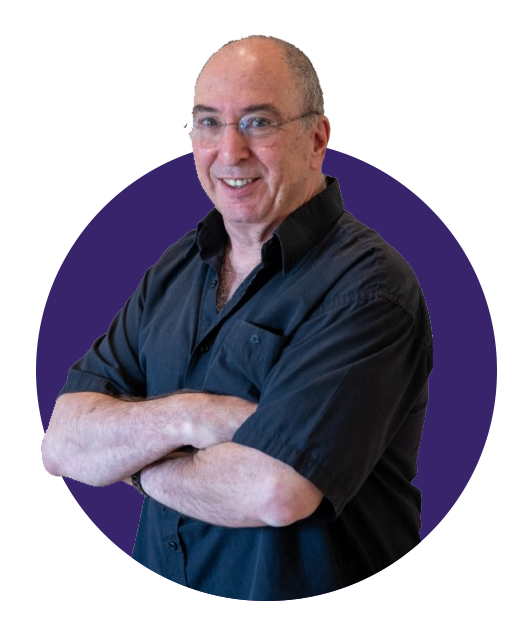
I am Dr. Avishai Antonovsky, PhD, a lecturer and storyteller about the secrets of human behavior.
For 49 years I have been on stage – first as a performing musician, and later, for 35 years, as a psychologist and lecturer in the behavioral sciences. To date, I have lectured to hundreds of thousands of people in Israel and abroad.
You may ask what sustains the passion. The answer lies in the responses and expressions of gratitude from people, highlighting the value they gained from a lecture delivered at eye level and with humor – whether on surveys and lies, on photographing cultures, on health promotion, on decision-making in courts, or on… many other topics! (see further down this page.)
Who is my audience?
Any group of people who would like to share with me a meaningful and engaging hour, in Hebrew or in English: private gatherings and family events, retirees’ clubs, assisted living facilities, schools, hotels, business companies, public institutions, local authorities, health organizations, and more.
Here you can read testimonials from people who have attended my lectures (some of them are in English).
?What do I lecture about
As a psychologist, culture researcher, and expert in health promotion (and also a very serious enthusiast of photographing people), I address the following questions (and many others) in my lectures:
What kind of health were you diagnosed with in the past year, and what tests were performed to reach that diagnosis?
Western medicine focuses on illness: what causes illness, how do we diagnose illness, how do we treat illness, how do we prevent illness...
In the lecture “Health, disease, and the river in between: What helps us cope with life’s stressors?" I present an approach for which I am recognized as one of the world’s leading experts, centered on the question "What helps people move toward health?" (see the page on SALUTOGENESIS to learn more about this health promotion approach).

Have you ever thought about how confusing the wording of a survey question can be?
For example: "Do you oppose not allowing management not to approve the new safety procedures?"
In the lecture "Lies, damned lies, and statistics: Who do surveys serve?" I explain in plain language, using a wide range of real and amusing examples, why people sometimes do not tell the truth in surveys, how misunderstandings arise in everyday communication, and why statistics should not be treated as God-given truth.
What connects street photography in the 1970s in New York to a basic training graduation ceremony in the IDF?
What happens when the God of fertility from Papua New Guinea is called up for reserve duty in Israel?
These are just a taste of what is presented in the lecture "The art of observation: A photographic look at other cultures."
How is it that a person testifies in court under oath, with complete conviction, about an event that has never occurred?
I address this question in the lecture "Eyewitness testimony and memory illusions: Psychology visits the courtroom."
Does a human newborn already know that falling from a height is dangerous? And what does a marshmallow have to do with academic success?
We will talk about this in the lecture "Groundbreaking studies of the 20th century: A contribution to science or a moral problem?"
Would you jump into the water to save a drowning person when other people are around? Not so sure... why?
The answer can be found in the lecture on social psychology, a field that addresses the question "How is our behavior influenced by the presence of other people?"
Which factors, beyond the law and the evidence, influence judges’ decision-making processes?
I expand on this in the lecture "Not by law alone: How are decisions made in court?", which is based on my doctoral research.
What is it about silly TikTok videos that draws us in so strongly, and why do we diligently track every like we receive on Facebook (even if we do not admit it)?
You can learn about this in the lecture on "The psychological effects of social media use."
Which part of the brain is especially developed in taxi drivers?
Why does Facebook, which is supposedly given to us for free and meant to connect people, in practice create unprecedented social polarization?
What are the psychological consequences of staying on a space station, and why do tears not flow there at all?
The answers are revealed in the lecture "The neuron, the crowd, and outer space: A psychological journey from the depths of the brain to the vastness of space."
We like to think of ourselves as rational beings – capable of weighing data, calculating odds, and making informed decisions. The reality, as Nobel laureates Daniel Kahneman and Amos Tversky famously revealed, is quite different. Our brain is a magnificent machine of cognitive shortcuts, biases, and illusions that lead us to trip over the same logical hurdles time and time again. In this fascinating and eye-opening lecture, "That Makes No Sense! A sober look at the flaws of human reasoning", we will dive "behind the scenes" of human thought to understand why we fall into our own mental traps – and discover how a sober look at our mistakes can actually turn us into better, smarter decision-makers.
?Want one or more of the lectures
If you haven’t yet read or listened to what people have to say about my lectures (in English too), you are welcome to check out my recommendations page.
You are also invited to read more about me or to take a look at my Tips and Story pages (in Hebrew, but your browser can probably translate them easily).
Want one of the lectures? Contact me on WhatsApp or drop me an e-mail.